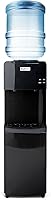
Bottleless vs Bottled Water Coolers for Home
A bottleless water cooler suits a home with a cold-water line near the sink, while a bottled cooler suits a home without one. The bottleless unit trades jug hauling for filter changes, and the bottled unit trades installation for jug swaps.
On this page (14 sections)
- How we compared the two types
- What does each type need from your home?
- How does the water reach the cup?
- What does setup take?
- Filter or jug upkeep: which is less work?
- How much space does each one take?
- What about hauling jugs?
- How do the temperatures compare?
- How much power does each one use?
- Where does each one fit best?
- Which setup is easier to move?
- The specs side by side
- Who should pick which cooler
- Which bottleless water cooler for home use should you pick?
A bottleless water cooler connects to a cold-water line and uses filters, while a bottled cooler runs on 3- or 5-gallon jugs that you refill or swap.
Both can suit a home, but they ask for different things. One needs a water line and an install, and the other needs jug hauling and storage.
If you're furnishing a new kitchen, decide the water source first. It narrows the list faster than any single feature.
We compared an Avalon B8WHT bottleless cooler with an Igloo bottom-loading jug cooler, so you can see the trade-offs side by side.
If you're new to the category, our bottom-loading water dispensers guide covers the jug route in more depth. For the countertop side, our best countertop water dispensers roundup is the next stop.
 Best for a kitchen with a cold-water line
Avalon B8WHT Bottleless Cooler

How we compared the two types
We compared the setup, upkeep, space and power details each maker states, and we research units rather than test them. For more on the Avalon, see Avalon's website.
Our score weighs specs, features and buyer feedback against what you're shopping for. The scores reflect fit for the job, so a jug cooler can score lower in a kitchen that has a water line.
What does each type need from your home?
A bottleless cooler needs a cold-water line and an outlet, and a bottled cooler needs an outlet and a place to keep jugs. Run through both lists before you shop.
For the bottleless Avalon B8WHT:
- A cold-water line within reach of the spot, with access under the sink for its adapter and shut-off valve.
- An outlet, and 12 by 13 inches of counter or cabinet space.
- A calendar reminder for the next filter change.
For the bottled Igloo:
- An outlet and a floor spot about 12 by 15 inches, with the 41.71-inch height clear.
- A source of 3- or 5-gallon jugs, whether you buy them full or refill them.
- Storage for spare jugs and a clear path from the door to the kitchen.
How does the water reach the cup?
The bottleless cooler draws water from your cold-water line through filters, and the bottled cooler draws from a jug in its cabinet.
The B8WHT takes water from your cold line through a sediment filter and a carbon block. The Igloo keeps a 3- or 5-gallon jug in a lower cabinet, so you refill from a bottle instead of a pipe.
The jug route lets you choose where the bottle comes from, while the bottleless route ties you to your own line. The Igloo takes 3- or 5-gallon jugs, so you can pick the size you're able to carry.
A third route is a jug with a pump, which skips the cooler but gives no hot or cold water. Our 5-gallon water jug pumps guide covers that option.
What does setup take?
The bottleless cooler needs a water line and an install, and the bottled cooler needs only an outlet and a jug. That one difference decides most homes.
Avalon's B8WHT kit includes 20 feet of tubing, a three-way push-connect adapter, an under-sink 3/8-inch adapter with a shut-off valve and a filter flushing adapter. Follow the maker's install guide for the connection, since plumbing steps are outside what we cover.
Before you buy, ask whether your sink has a cold line you can reach. If the closest line is far from the spot, the install can take more planning than the cooler itself.
The Igloo needs a spot near an outlet and a jug in place, with no water connection.
Filter or jug upkeep: which is less work?
The bottleless cooler's upkeep is filter changes, and the bottled cooler's upkeep is jug swaps. Each one follows a different rhythm.
Avalon says the B8WHT's dual filters last 6 months or 1,500 gallons, so changes come on a schedule rather than with each refill. The Igloo has an indicator for when the bottle needs changing, so you know when to order a new jug.
Jugs make the trips visible, while filter changes need a date on your calendar. If you hate buying and storing jugs, the filter route removes that chore and adds a schedule to keep.
A worked example for a busy kitchen
Say your household draws about 20 cups of water a day, which is just over a gallon. A 5-gallon jug holds about 80 cups, so you would empty one in about 4 days, or nearly two jugs a week.
Over 6 months, that same household draws roughly 230 gallons. On the bottleless unit, that is well under the 1,500-gallon mark, so the 6-month limit comes first and you change the filters about twice a year.
Your own numbers will differ, so count how many cups your household really draws.
For a bottleless unit that also has a self-cleaning feature, see our best self-cleaning water dispensers roundup.
How much space does each one take?
The B8WHT is 19 inches tall and fits a counter or the space under a sink, while the Igloo stands on the floor at 41.71 inches. That height gap matters most in a tight kitchen.
The B8WHT measures 12 inches deep, 13 wide and 19 tall. The Igloo measures 12 inches deep, 15.16 wide and 41.71 tall, so it needs floor space and room for the jug to slide in.
If you plan to place the Igloo near the sink, measure that wall first, since the cabinet and the jug need the full height. If your kitchen is tight on counter space, the bottleless unit leaves the floor clear, though it still needs room near the sink.
For a compact bottleless model in more detail, our Avalon A12 review covers a countertop unit.
What about hauling jugs?
The Igloo's bottom-load cabinet avoids lifting a jug to the top, but you still buy, store and swap the jugs. Igloo says its design eliminates the need to lift heavy jugs.
The bottleless cooler needs no hauling at all, since the water comes through the line. A bottled cooler adds trips to the store or the door, and the jugs have to live somewhere.
A full 5-gallon jug weighs more than 40 lb. If your home has stairs or a long walk from the door to the kitchen, the jug route means more lifting on the way in.
Whether you buy full jugs or refill empties, the trip to the door or the store comes with the bottled route.
How do the temperatures compare?
Both coolers give hot and cold water, and Avalon rates the B8WHT's hot side up to 185 °F. The B8WHT has no room-temperature setting.
The B8WHT offers crisp cold and piping hot output, with two settings. The Igloo offers hot and cold settings, which covers tea, coffee and cold drinks.
Both units list a child safety lock on the hot side as a feature, so the lock doesn't set them apart.
How much power does each one use?
Avalon rates the B8WHT at 520 watts, and Igloo rates its cooler at 580 watts. The two are close.
Power use also depends on how often you draw hot water. A bottleless unit heats water the same way a jug cooler does, so hot-water habits matter on both.
Wattage is a rough guide, because it doesn't show how often each unit runs. Both are corded electric, so an outlet needs to be near the spot, and our electricity use guide explains what drives power use without cost figures.
Where does each one fit best?
The bottleless cooler fits a kitchen with a cold-water line, and the bottled cooler fits a garage, basement or home with no line. The right place depends more on the plumbing than on the room.
In a kitchen with a cold line near the sink, the bottleless unit is the natural fit. In a garage, a basement or an apartment where a water line is hard to reach, the jug cooler works without a new connection.
If you rent, check whether your lease or building allows a new water connection before you plan a bottleless install. A jug cooler is the lower-risk pick when you can't run a line.
Which setup is easier to move?
The jug cooler moves with you more easily, since a bottleless unit stays tied to its water line.
A freestanding jug cooler goes with you, and at the new home you only need a spot near an outlet and room for the jug. A bottleless unit needs a new install at the next home, with new tubing and a cold line to connect to.
If you may relocate, that is worth weighing before you choose.
The specs side by side
The two coolers differ on water supply, setup and upkeep, and they match on hot and cold water and corded power. The water supply row decides most of the choice for a home.
| Product | Best for | Water supply | Setup | Upkeep | Our score |
|---|---|---|---|---|---|
| Avalon B8WHT Bottleless Cooler | a kitchen with a cold-water line | Water line, filtered | Installation kit, under sink | Filters, 6 months or 1,500 gal | 8.2 |
| Igloo Bottom-Loading Jug Cooler | a home with no water line | 3- or 5-gallon jug | Plug in, no install | Swap jugs | 7.6 |
Use the table to check the rows that matter most to your setup, then read the sections above for the detail behind each one.
Who should pick which cooler
Pick the bottleless cooler if you have a cold-water line and want no jugs, and pick the bottled cooler if you have no line or can't run one.
- Pick the bottleless cooler if you want no jugs to haul or store.
- Pick the bottleless cooler if a cold-water line sits near the spot.
- Pick the bottled cooler if you have no water line and a spot near an outlet.
- Pick the bottled cooler if you'd rather not manage a filter schedule.
A bottleless water cooler for home use with a water line
In a kitchen with a water line close to the sink, a bottleless cooler saves the jug trips altogether. The install is a one-time part of the setup, so plan it before you order.
A bottled water cooler for a home with no line
With no water line, the jug cooler is the practical choice, and the Igloo's cabinet keeps the bottle out of sight. Plan where the jug will live, since the cabinet holds one bottle and spares need room too.
An office or break room you own
If the office has no line, a jug cooler is simpler, and the team can swap bottles on one set day. A bottleless unit fits an office that already has a cold line near its kitchenette.
Which bottleless water cooler for home use should you pick?
Pick a bottleless water cooler if a cold line is close and you want no jugs, and pick a bottled cooler if you have no line. Both can suit a home, so the decision comes down to plumbing, space and how you feel about jugs.
If you're torn, ask one question: can you reach a cold-water line from the spot without moving anything? If yes, lean bottleless, and if no, lean bottled.
Write down whether you have a line, how much you want to lift and how you feel about a filter schedule. Avalon and Igloo both give a 1-year warranty, so ask the seller to confirm the terms before you pay.
If the names still confuse you, our water cooler vs water dispenser comparison explains how they map to these setups. For a wider set of options, see our water dispenser buying guide for your home.
Frequently asked questions
Do bottleless water coolers need a water line?
Yes, a bottleless cooler connects to a cold-water line through an installation kit, such as the one that comes with the Avalon B8WHT. Follow the maker's install guide for the connection, and if you can't reach a line, a jug cooler is the simpler route.
Is a jug cooler easier to set up?
For most homes, yes, because a jug cooler like the Igloo bottom-loader needs only a power outlet and a 3- or 5-gallon jug. The trade-off is that you buy, store and swap jugs for as long as you use the unit, so plan for that before you commit.
How often do the filters on a bottleless cooler need changing?
Avalon says the B8WHT's dual filters last 6 months or 1,500 gallons, and the unit uses a sediment filter and a carbon block. Confirm the replacement filters with Avalon before you order, and note the install date so you know when the next change is due.
Is a bottleless cooler a good fit for a small home office?
It can be, if the office has a cold-water line near the desk or break room, since the B8WHT needs a water line and an install. A jug cooler is simpler when there is no line, so compare the setup, not just the name.
Which is better for an apartment, bottleless or bottled?
A jug cooler is usually the easier fit for an apartment, since it needs only an outlet and a spot for the jugs. A bottleless cooler needs a cold-water connection, so check whether your lease or building allows one before you buy.