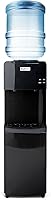
Bottom-Loading Water Dispensers: The Complete Guide
A bottom-loading water dispenser keeps a 3- or 5-gallon jug in a cabinet at floor level, so you slide the jug in instead of lifting it overhead. Compare jug sizes, temperatures and upkeep before you pick a model.
On this page (20 sections)
- What is a bottom-loading water dispenser?
- Is bottom loading easier than top loading?
- Which jug sizes does a bottom-loader take?
- Which temperatures should a bottom-loader offer?
- Which bottom-loading features are worth checking first?
- What are bottom-loaders made of?
- Do self-cleaning bottom-loaders clean themselves?
- Which bottom-loading water dispenser models should you compare?
- How do you clean a bottom-loading dispenser?
- How often should you clean one?
- What causes leaks and dry taps?
- How much power does a bottom-loading dispenser use?
- Where should you put a bottom-loader?
- How do you set up a bottom-loader?
- Is a bottom-loader right for a home or a small office?
- Which stands, pumps and cleaning kits help?
- How do bottom-loaders compare with other types?
- When is a bottom-loader the wrong choice?
- What should you check before you order a bottom-loader?
- Which bottom-loading dispenser should you pick?
A bottom-loading water dispenser keeps a 3- or 5-gallon jug in a cabinet at floor level. You slide the jug in from below instead of lifting it overhead, and the jug stays out of sight.
This guide covers how these dispensers work, which features matter, how to clean and care for one, and how much room and power one needs. It's written for homeowners and small-office managers who are about to buy.
We compared four bottom-loaders from Avalon and Brio, and the table in the model section sets their sizes, weights and features side by side.
What is a bottom-loading water dispenser?
A bottom-loading water dispenser has a cabinet at its base that holds the jug, and the jug goes in from the bottom. The taps sit above the cabinet, and the unit draws water up from the jug below.
For how the parts work together, see how a bottom-loading water dispenser works.
How the jug fits in the cabinet
Brio says you connect the jug and slide it into the cabinet, with no awkward flipping. That is the main change from a dispenser that sits the jug on top.
Water weighs about 8.3 pounds per gallon, so a full 5-gallon jug is over 40 pounds. A 3-gallon jug is closer to 25 pounds.
Who a bottom-loading dispenser suits
A bottom-loader suits anyone who would rather not lift a full jug overhead. That includes people setting up a unit for an older parent, and small offices where several people take turns changing the jug.
Each model in this guide is freestanding, so it sits on the floor.
Is bottom loading easier than top loading?
Bottom loading is easier on the lifting, because the jug goes in at floor level. A top-loader needs the full jug lifted onto the top of the unit each time.
Avalon also says its bottom-loading design cuts down on spills. Top-loaders usually sit on a counter, so they use counter space instead of floor space.
If you're torn between the two, top-loading vs bottom-loading water dispensers lays out the trade-offs side by side.
Which jug sizes does a bottom-loader take?
Many bottom-loaders take a 3-gallon or a 5-gallon jug, but the cabinet sets the limit. Check the model's jug size before you buy a jug.
Avalon describes the A4 as suitable for 3 to 5-gallon bottles. Brio says the cabinet on its 3-temp model fits either size, and its 130 Series and 520 Series are made for 5-gallon bottles.
None of the four comes with a jug, so plan on getting your own.
3-gallon and 5-gallon jugs compared
A 3-gallon jug is lighter, so it's easier to slide in and out. A 5-gallon jug holds more water, so you change it less often.
If the person changing the jug wants the lighter load, pick a model that also takes 3 gallons, such as the Avalon A4 or the Brio 3-temp.
Measure the cabinet before you buy a jug
The cabinet sets the largest jug you can use. A jug that is too tall or too wide won't slide in, so check the jug's size against the maker's guidance before you order.
Which temperatures should a bottom-loader offer?
Look for cold, room-temperature and hot taps on one unit. Three settings cover cold drinks, soups and tea without a second appliance.
All four models in this guide offer three temperatures. Brio's 130 Series adds indicator lights that show when the hot and cold water are ready.
Room-temperature water is easy to overlook, but it's handy for mixing drinks and filling pitchers without any chill. Brio suggests the 130 Series for filling sports bottles, making soups and iced tea.
Hot water can burn. Brio rates the 3-temp's hot water at up to 198 °F and the 520 Series at up to 200 °F, while Avalon rates the A4's cold water at 8.3 °C, about 47 °F.
Which bottom-loading features are worth checking first?
Check the hot-tap lock, the empty-bottle alert, the nightlight and the spout layout first. These four show up in daily use, so they matter more than the extras.
Child safety lock on the hot tap
Brio lists a two-step child safety lock on the hot tap of the 3-temp, the 130 Series and the 520 Series. On the 130 and 520, Brio says the hot-water button relocks automatically after you dispense.
Hot water can burn, so the lock is worth noting when you compare models.
Empty-bottle alert and nightlight
Avalon's A4 has an empty-bottle indicator and a nightlight that makes the spouts easy to see at night. Brio's 130 Series uses an LED light that comes on when the jug is almost empty.
The Brio 520 Series adds an LED light over the dispensing area, so you can see what's poured and check the drip tray.
Spout layout and drip tray
Look at where the spouts sit, since a spout set too low is awkward to fill a tall bottle from. Brio says the lit dispensing area on the 520 Series helps you choose the right spout.
Drip trays collect spills, so note how easy the tray is to reach when you clean.
What are bottom-loaders made of?
The four models here come in stainless steel and black finishes. The Avalon A4 has a stainless steel cabinet, and the Brio 3-temp comes in black and stainless steel with a stainless steel accent.
The Brio 520 Series is plastic and stainless steel, and the Brio 130 Series is black plastic that Brio calls a rugged polymer design. Brio says the reservoirs on the 3-temp and 520 Series are 304 stainless steel.
The material affects how you clean the outside, because stainless steel shows fingerprints and plastic can scratch. Wipe either one with a soft, damp cloth and skip abrasive pads.
Do self-cleaning bottom-loaders clean themselves?
Some models have a cleaning feature the maker describes, but they still need the care steps in your manual. Self-cleaning is a useful feature, not a reason to skip upkeep.
What Brio says about the 520 Series
Brio says the 520 Series has a UV self-cleaning feature that you start by pressing a button. Follow the maker's manual for cleaning and care.
What self-cleaning doesn't replace
Even with a self-cleaning cycle, the drip tray, the cabinet and the jug area still need a look at each full clean. Check the manual for what the cycle covers, and plan the rest of your cleaning around that.
Self-cleaning compared with regular models
Regular models depend on the cleaning schedule in the manual. Self-cleaning models add a feature on top of that schedule, so the schedule still matters.
Our do self-cleaning water dispensers really work guide explains what the feature covers. The self-cleaning vs regular water dispensers comparison sets the two types side by side.
Our Avalon vs Brio self-cleaning comparison puts two brands next to each other. For a shortlist, best self-cleaning water dispensers gathers the models we'd look at first.
Which bottom-loading water dispenser models should you compare?
Compare the Avalon A4 and the three Brio units first, because they cover the main choices: jug size, hot-tap lock and self-cleaning. The table sets the four side by side, using the sizes and features we checked for each one.
| Model | Jug size | Size (D x W x H, inches) | Weight (lb) | Notable features |
|---|---|---|---|---|
| Avalon A4 | 3 to 5 gallon | 12 x 13 x 41 | 38.1 | Three temperatures, nightlight, empty-bottle indicator |
| Brio 3-temp | 3 or 5 gallon | 15.6 x 12.2 x 41.4 | 40.5 | Three temperatures, two-step child safety lock, LED empty-bottle alert |
| Brio 130 Series | 5 gallon | 14.4 x 11.8 x 41.7 | 39.2 | Three temperatures, two-step child safety lock, LED bottle alert, 1.5 liters per minute |
| Brio 520 Series | 5 gallon | 15.6 x 12.2 x 41.4 | 39.6 | UV self-cleaning, nightlight, two-step child safety lock |
The Avalon A4 is the lightest of the four, at 38.1 pounds, and the Brio 3-temp is the heaviest, at 40.5 pounds. The 520 Series is the only model here with a self-cleaning feature.
Who makes these models
Avalon and Brio make all four models, and both also sell other water products. Match your manual to your exact model number before you follow any cleaning steps.
The model numbers are A4BLWTRCLR for the Avalon A4, CLBL420V2 for the Brio 3-temp, CLBL130 for the 130 Series and CLBL520SC for the 520 Series.
Avalon says it started in 2008 as an office and breakroom supplier. Brio says it is based in Southern California and also sells filtration systems for homes and businesses.
Reviews and roundups for each model
Two of these models have a full review: the Avalon A4 review and the Brio 520 Series review. We also reviewed an Igloo bottom-loading water cooler and a countertop option, the Avalon A12 bottleless dispenser.
For a ranked shortlist, see best bottom-loading water dispensers.
How do you clean a bottom-loading dispenser?
Unplug the unit and check your manual first. Then clean the cabinet, the reservoir, the taps and the drip tray, rinse well, and let everything dry before you restart.
Clean the cabinet and drip tray
The cabinet is where spills collect, so wipe it each time you change the jug. Use a soft cloth, and skip bleach and harsh sprays.
Some manuals allow a mild vinegar solution, so use only what your manual names, and never mix cleaners. For the full steps, read how to clean a bottom-loading water dispenser.
Brand steps differ
Each brand has its own layout, so cleaning steps change from one model to the next. Our guides for a Primo water dispenser and an Avalon water dispenser cover those two brands.
For general steps that suit most 5-gallon coolers, see how to clean a water dispenser, step by step.
Keep the manual handy
The Avalon A4 comes with a Use and Care Guide, and the Brio 3-temp and 520 Series come with a manual and a care guide. The Brio 130 Series comes with a user manual.
Keep that paperwork near the unit, since it sets the cleaning steps and the schedule for your model.
How often should you clean one?
Follow your manual's schedule, and clean sooner if you see buildup in the reservoir or notice a musty smell. Our how often to clean a water dispenser guide covers timing in more detail.
Yadool says its cleaning kit is for repeat use every three months. That is one maker's pace, so check it against your own manual before you copy it.
Signs a clean is overdue
A musty smell from the cabinet, a drip tray that fills fast and visible buildup in the reservoir all mean it's time. So does water that tastes different from how it did when the unit was new.
Run a full clean when you see any of these, even if the schedule says it's early.
What causes leaks and dry taps?
Many leaks and dry taps have simple first checks, such as the jug level and how the jug sits in the cabinet. Start there before you assume the unit is broken.
Check the jug first
An empty jug is easy to rule out, so check the level and the empty-bottle light. If the jug is full and seated properly, follow the steps in our water cooler leaking guide.
When a Brio stops dispensing
If a Brio unit stops dispensing water, our Brio water dispenser not dispensing water guide covers the fixes for that brand.
If water pools in the cabinet or under the unit, unplug it and find where the water is coming from before you refill the jug.
How much power does a bottom-loading dispenser use?
Power use depends on four things:
- whether the hot tank stays on between uses
- the room temperature around the unit
- how often you draw hot water
- any energy-saving or eco mode the maker lists, if your model has one
Avalon lists 420 watts of heating power and 100 watts of cooling power for the A4, and Brio lists 300 watts for its 130 Series. Those are rated figures, so use them to compare models, not to predict your monthly use.
Brio lists ENERGY STAR 3.0 for the 130 Series, and Avalon lists the A4 as UL and ENERGY STAR approved. The ENERGY STAR site explains what that label covers.
Ways to use less power
If your manual describes a way to turn the hot water off or use an energy-saving mode, start there. Placing the unit away from heat sources also helps, because a warm room makes the cold side work harder.
For the full breakdown, read how much electricity a hot and cold dispenser uses.
Where should you put a bottom-loader?
Put it on a level floor near an outlet, with room to slide the jug in and out. All four models run on household electricity, so the spot needs an outlet within reach of the cord.
The models in this guide are 12 to 15.6 inches deep, 11.8 to 13 inches wide and 41 to 41.7 inches tall.
The Avalon A4 is 12 inches deep, 13 inches wide and 41 inches tall, while the Brio 520 Series is 15.6 inches deep, 12.2 inches wide and 41.4 inches tall.
Keep the unit away from ovens and sunny windows, since room temperature affects how hard a unit works. Check your manual for the clearance the maker asks for around the sides and back.
How do you set up a bottom-loader?
Setup is mostly unboxing, placing the unit and sliding in the jug, and your manual sets the first-use steps. Brio says the 130 Series needs no tools, plumbing or water line for setup.
- Pick a level spot with the floor space and clearance you measured.
- Unbox the unit and check the parts against your manual.
- Connect the jug, then slide it into the cabinet.
- Follow the first-use steps in your manual, then check each tap.
Bottleless units follow a different path, because they need a water line. For those, follow the maker's install guide rather than a general set of steps.
Is a bottom-loader right for a home or a small office?
A bottom-loader works in both places, but a small office needs a plan for who changes the jug and who cleans the unit. At home, the main questions are floor space, temperatures and whether you want self-cleaning.
In an office, count the people who will use the unit, since that sets how often the jug runs out.
Setups for a household
At home, the person who changes the jug should set the jug size. If that person wants the lighter load, pick a model that takes 3 gallons, and put the unit where the jug has a clear path in.
A nightlight helps in a kitchen or hallway, since you can find the spouts without turning on a room light. The Avalon A4 and the Brio 520 Series both have one.
Setups for a small office
The empty-bottle alert on the Brio 130 and 3-temp models helps the next person know when to change the jug. Write the cleaning schedule on a shared note or the wall, and name one person to own it.
Where to find home and office picks
For home picks, see best hot and cold water dispensers for home. For offices, start with best hot and cold water dispensers for small offices and how to choose a water dispenser for a small office.
If you're buying for a household, the water dispenser buying guide for home walks through the choices in order.
Which stands, pumps and cleaning kits help?
Accessories can help with the jug and the upkeep, but buy only what your unit needs. Our water dispenser stands for 5-gallon jugs guide explains how to choose a stand, and 5-gallon water jug pumps compares manual and electric picks.
Water cooler cleaning kits sorts the options into what to buy and what to skip. Use only a cleaner that your manual names, even when a kit makes the step easier.
How do bottom-loaders compare with other types?
A bottom-loader uses a 3- or 5-gallon jug, while a bottleless unit connects to a water line and skips the jug. Bottleless units need a water line, so follow the maker's install guide before you buy.
Our water cooler vs water dispenser guide explains the terms, and bottleless vs bottled water coolers for home compares the two set-ups.
If you want a countertop option, best countertop water dispensers covers those models.
When is a bottom-loader the wrong choice?
A bottom-loader is the wrong choice if you have no floor space for a unit about 41 inches tall, or if you'd rather not handle jugs at all. A countertop model or a bottleless unit may fit better.
Floor space is the first limit. A bottom-loader needs its footprint plus room to slide the jug in and out, so a narrow hallway or a tight kitchen corner may not work.
The jug is the second limit. A bottom-loader depends on a full jug, so you need a plan for when it runs out.
A bottleless unit skips the jug, but it needs a water line and an install that follows the maker's guide.
What should you check before you order a bottom-loader?
Check the jug size, the cabinet fit, the temperatures, the hot-tap lock, the bottle alert, your cleaning plan and the warranty before you order. Those points decide most of the day-to-day experience with a unit.
- Jug size: confirm the model takes the 3- or 5-gallon jug you plan to use.
- Cabinet fit: measure the floor space and the height before you buy.
- Temperatures: pick hot, cold and room if you cook or make drinks.
- Hot-tap lock: note whether the hot tap has a two-step lock.
- Bottle alert: choose a model with an indicator, so you know when the jug is nearly empty.
- Cleaning plan: decide who cleans the unit, how often, and whether self-cleaning fits.
- Warranty: Avalon gives the A4 a 1-year warranty, so confirm the terms for any other model before you buy.
Weight matters too, since you may move the unit to clean behind it. The four models weigh 38.1 to 40.5 pounds without a jug, so plan for help if the cabinet sits against a wall.
Which bottom-loading dispenser should you pick?
Pick the model whose temperatures, lock and self-cleaning feature match how you'll use it. Each pick below fits one common need.
- Pick the Avalon A4 if you want hot, cold and room water in a stainless steel cabinet, with a nightlight and an empty-bottle indicator.
- Pick the Brio 3-temp if you want a two-step lock on the hot tap and an LED display for the empty-bottle alert.
- Pick the Brio 130 Series if you want a black body with three temperatures. Brio rates the flow at 1.5 liters per minute.
- Pick the Brio 520 Series if you want UV self-cleaning and a stainless steel finish, and you still plan to follow the manual's care steps.
- Pick a bottleless unit if you have a water line and don't want to handle jugs at all, and check the install guide first.
For a ranked shortlist, see best bottom-loading water dispensers. Before you buy, our water dispenser buying guide for home gives you a checklist to run through.
Frequently asked questions
What is a bottom-loading water dispenser?
A bottom-loading water dispenser holds a 3- or 5-gallon jug in a cabinet at floor level, so you slide the jug in from below instead of lifting it overhead. The taps on top give you cold, room-temperature or hot water for drinks, soups and tea, depending on the model.
Is a bottom-loading dispenser easier than a top-loading one?
Yes, for lifting, because a bottom-loader takes the jug at floor level while a top-loader needs the full jug lifted onto the unit. A top-loader usually sits on a counter, though, so floor space, counter space and cabinet design should all factor into your choice.
Do self-cleaning bottom-loading dispensers still need manual cleaning?
Yes, keep following your manual's cleaning steps, because a self-cleaning cycle doesn't replace the care that the maker's manual describes. Brio says its 520 Series has a UV self-cleaning feature that starts when you press a button, and the cabinet and drip tray still need a regular look.
How much electricity does a bottom-loading dispenser use?
It depends on whether the hot tank stays on, the room temperature and how often you draw hot water, so check your manual for any energy-saving mode the maker lists. Brio lists ENERGY STAR 3.0 for its 130 Series, and our electricity guide covers what drives power use.
What should I clean first on a bottom-loading dispenser?
Unplug the unit and check your manual first, then empty the jug and clean the cabinet, reservoir, taps and drip tray with only a cleaner your manual names. Rinse well and let everything dry, and skip bleach and never mix cleaners.