Best Water Dispenser for Your Home: A Buying Guide
The best water dispenser for home use is the one that fits your space, your jug habits and the upkeep you will really do. Pick the type first, then check temperatures, size and cleaning before you compare models.
On this page (12 sections)
- Where will the dispenser sit?
- Should you use jugs or a bottleless unit?
- Bottom loading or top loading: which is easier to live with?
- Which temperature settings do you need?
- Does self-cleaning change your upkeep?
- How big should the unit be?
- How many people will use the dispenser?
- How much power does a hot and cold dispenser use?
- What upkeep should you plan for?
- Which accessories are worth a look?
- Checklist before you order a home dispenser
- Pick the best water dispenser for home use for your space
The best water dispenser for home use depends on where it will sit, how water gets into it and how much upkeep you will do. This guide works through those choices in order.
You will see "water cooler" and "water dispenser" used for the same kind of unit, and water cooler vs water dispenser explains where the two terms differ.
We compared the specs and features that four brands publish for five models: Avalon, Brio, Igloo and Euhomy. Each section starts with the decision, then shows the model that fits it best.
Where will the dispenser sit?
Measure the spot before you shop, because height and depth decide which units fit. The bottom-loading units here stand about 41 inches tall, while the countertop Avalon B8BLK is only 19 inches tall.
Check the depth, not just the height
The Brio 520 is 15.6 inches deep, and the Euhomy is 11 inches deep. A few inches can decide whether a unit fits a narrow corner or blocks a walkway.
Measure the gap beside any cabinet the unit will sit near, and note where the nearest outlet is.
Leave a little room behind the unit for the cord, and read the manual for any clearance the maker asks for.
Keep the outlet and the water line in view
Every unit in this guide is corded electric, so plan for an outlet within reach of the cord. Bottleless units also need a water line close by, which limits where you can put them.
None of these makers publishes a noise level. If noise matters in your kitchen or office, ask the brand before you order.
Should you use jugs or a bottleless unit?
A jug unit can go anywhere with an outlet, while a bottleless unit needs a water line at the spot. Jug units take 3 or 5 gallon bottles that you swap by hand.
What a jug unit asks of you
Someone has to order and change the bottles, so decide who that is first. A jug unit has no water line to connect, so it can sit in a living room or hallway as well as a kitchen.
A spare jug on hand means an empty one never leaves a busy household without water.
What a bottleless unit asks of you
A bottleless unit needs a water line, so use the maker's install guide for the connection. This guide doesn't cover plumbing steps.
The Avalon B8BLK is a countertop bottleless unit with a two-stage filter set and an installation kit. Avalon says it is NSF certified and UL approved.
The kit includes 20 feet of 1/4-inch tubing and an under-sink adapter with a shut-off valve.
Filters are the main upkeep task on a bottleless unit, so know the change schedule before you buy.
Bottom loading or top loading: which is easier to live with?
Bottom loading lets you slide the jug into a cabinet, so you lift it less. Top loading gives you a shorter unit, but each full jug goes up on top.
Bottom-loading water dispensers covers how this type works, and top loading vs bottom loading compares the two side by side.
Bottom loading keeps the jug low
Avalon says its bottom loading removes the strain of lifting and reduces spills. The A4 takes 3 to 5 gallon bottles, and it stands 41 inches tall.
A bottom-loader needs a clear path to the jug cabinet, so measure that space as well as the height of the unit.
Top loading is shorter but needs lifting
The Igloo is a top-loading unit that stands 36.5 inches tall. That is 4 to 5 inches shorter than the bottom loaders in this guide, which can matter under a low shelf.
Water weighs about 8.3 pounds per gallon, so a full 5 gallon jug is over 40 pounds. Top loading means lifting that weight to the top of the unit every time.
Igloo also makes a bottom-loading cooler, covered in our Igloo bottom-loading water cooler review.
Spills happen with either style, so look for a drip tray you can pull out and wipe.
Which temperature settings do you need?
Most homes use hot and cold water every day, so start with those two. A third, room-temperature setting is handy for filling a sports bottle or a glass you don't want cold.
Models with three settings
The Avalon A4 and the Brio 520 Series each give you hot, cold and room-temperature water. Both are bottom loaders, so pick the jug style first and the temperature set second.
Models with a back switch
Euhomy says the hot and cold switch on the back of its unit lets you choose cold, hot or room-temperature water. Because the switch sits on the back, leave enough room to reach behind the unit.
Euhomy gives the cold output as 2.5 liters per hour and the hot output as 5 liters per hour. Compare those rates if several people tend to fill glasses back to back.
Models with two settings
The Avalon B8BLK has two settings, cold and hot. If you never need room-temperature water, two settings may be enough for your home.
Hot water can burn
Hot water can burn, so look for a lock on the hot spout. Igloo and the Avalon B8BLK both list a child safety lock there, and the Brio 520 and Euhomy use a two-step release.
Brio rates the 520 up to 200 °F, and Igloo rates its unit up to 210 °F. Those are the top temperatures the brands name.
Does self-cleaning change your upkeep?
Self-cleaning can handle part of the upkeep, but it doesn't replace the steps in your manual. Use only the cleaning routine and cleaners that your manual names.
What Brio says about the 520 Series
Brio says the 520 Series has a UV self-cleaning feature that you start with one press of a button. Check Brio's manual for how often to run it and for any cleaning it asks you to do by hand.
Do self-cleaning water dispensers really work? goes deeper on what the feature does and doesn't cover.
A routine you still need
Start any cleaning by unplugging the unit, then read your manual for the steps and the cleaners it names. Some manuals allow a cleaning kit or a mild vinegar solution, so use only what your manual names.
Rinse well and let the unit dry before you plug it back in. Wipe the spouts and the drip tray on a schedule you will keep.
Euhomy says the top lid comes off for cleaning and the catch tray is removable, so read the manual for how it wants each part cleaned.
How often to clean a water dispenser covers timing, so you can set a routine that fits how much your household uses the unit.
How big should the unit be?
Choose the size from your space and the jug you plan to buy. Check the exact height, depth and width against the spot before you order.
Weight of a home water dispenser
The A4 weighs 38.1 pounds, and the Brio 520 weighs 39.6 pounds. Plan the path from the door to the spot before you carry it in, since you may have to move it alone.
Jug sizes
The A4, the Igloo and the Euhomy take 3 or 5 gallon bottles. The Brio 520 is built for 5 gallon bottles.
A full 3 gallon jug weighs about 25 pounds against more than 40 for a 5 gallon jug. That makes a 3 gallon jug easier to carry up steps.
Countertop or floor
A countertop unit uses counter space, while a freestanding unit needs floor space and a clear path. Igloo says its unit works on a countertop or freestanding.
On a counter the Igloo adds all 36.5 inches of its height, so check the space under any wall cabinet. The B8BLK is only 19 inches tall, which is why it suits a counter better.
How many people will use the dispenser?
Count the people who pour water each day, since that sets how often a jug runs out. A 5 gallon jug holds about 80 eight-ounce glasses, so four people pouring six a day would empty one in about three days.
Igloo says its unit suits homes, kitchens, offices and dorm rooms. A busy household simply draws water more often, whatever the room.
Decide who fills and who cleans
Decide who orders the jugs or filters and who wipes the unit before it arrives. A reminder on the fridge works better than hoping someone remembers.
If the unit will serve a workplace, read how to choose a water dispenser for a small office instead.
How much power does a hot and cold dispenser use?
The hot side is the part to watch, so whether it stays on and how often you draw hot water matter most. A switch for either side gives you the most control.
What the brands publish
Igloo gives its top-loading unit a 580-watt figure. Avalon gives the A4 a 420-watt hot side and a 100-watt cold side.
Those are the brands' own figures, so use them to compare models rather than to predict how much power you will use.
Switches and habits
Igloo says its energy-saving switches let you turn off the hot or cold side when it isn't needed. A switch only helps if you use it, so build it into a routine.
Keep the unit away from the stove and sunny windows, since a warm room makes the cooling side work harder.
How much electricity a hot and cold dispenser uses explains what else changes the total, including how often you draw water.
What upkeep should you plan for?
Plan for three things: jug or filter changes, a regular wipe of the spouts and drip tray, and the cleaning steps in your manual. Set a reminder for each one so none of them slips.
Jug changes and filter changes
Avalon says the A4 has an empty-bottle light that comes on when the jug needs replacing.
Avalon also lists a night light on the A4, and Brio says the 520 has an LED night light and an illuminated dispensing area. Those help if someone fills a glass in a dark kitchen.
The B8BLK is bottleless, so its filters are the schedule to watch. Avalon says those filters last 6 months or 1500 gallons.
Manuals and warranties
The Brio 520 comes with a manual and a care guide, and the Avalon A4 comes with a use and care guide. Keep them where you can find them.
Avalon gives the A4 and the B8BLK a 1-year warranty, Igloo describes a 1-year limited warranty, and Euhomy offers a one-year warranty. We didn't find a warranty length for the Brio 520, so ask Brio if that matters to you.
Water quality and your tap
Follow the maker's guidance on water and cleaning, and ask your local water utility about your tap water. The EPA's drinking water pages are a good place to start.
Which accessories are worth a look?
None of the five units needs a stand, since the four jug models hold the jug and the B8BLK uses none. Stand choices for 5-gallon jugs covers the case where you skip an electric unit.
A cleaning kit is optional, and it's worth buying only if your manual names or allows it. What to buy and skip in cleaning kits helps you avoid extras you don't need.
Checklist before you order a home dispenser
Work through these checks before you order, so the unit fits both the spot and your routine.
- Measure the height, depth and the gap beside any cabinet.
- Choose jug or bottleless, and confirm the water line if you go bottleless.
- Decide who lifts the jug, then pick bottom or top loading.
- List the temperatures your household uses every day.
- Check the jug size and the unit's weight.
- Read the cleaning steps in the manual.
- Note the warranty length the brand gives.
- Ask the brand about noise if it matters where the unit sits.
Pick the best water dispenser for home use for your space
Pick the Avalon A4 if you want bottom loading with hot, cold and room-temperature water, and you have a cabinet or floor space tall enough for the jug.
- Pick the Igloo if you can lift full jugs and want a shorter top-loading unit with energy-saving switches.
- Pick the Avalon B8BLK if a water line can reach your counter and you want to skip jug changes.
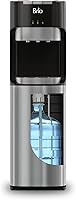
- Pick the Brio 520 if you want bottom loading and a UV self-cleaning feature you start with one press.
- Pick the Euhomy if you want a slim top-loading unit with a back switch for cold, hot or room-temperature water.
If you are still deciding on a type, start with best bottom-loading water dispensers or best countertop water dispensers. For a home with several people, best hot and cold water dispensers for home is the next stop.
Frequently asked questions
What is the best water dispenser for home use?
The best water dispenser for home use is the one that fits your space, your jug habits and the upkeep you will really do. A bottom-loading unit suits a kitchen with room for the cabinet, and a bottleless unit suits a home where a water line can reach the counter.
Should I buy a bottom-loading or a top-loading dispenser?
Choose bottom loading if you want to lift the jug less, and choose top loading if you can lift a full jug and want a shorter unit, such as the Igloo at 36.5 inches tall. A full 5 gallon jug weighs over 40 pounds, so who does the lifting decides it.
Do I need a water line for a home dispenser?
Only a bottleless unit needs one, while jug models run on bottles you swap yourself. A bottleless unit such as Avalon's B8BLK connects to a water line and uses its own filters, so follow the maker's install guide for the hookup and know the filter schedule first.
How much power does a hot and cold dispenser use?
The hot side is the part to watch, and how often you draw hot water changes the total most. Igloo gives its top-loading unit a 580-watt figure and Avalon gives the A4 a 420-watt hot side, so use those brand figures to compare models rather than to predict your own use.
Does self-cleaning replace regular cleaning?
Not on its own. Brio says the 520 Series has a UV self-cleaning feature that you start with one press of a button, but cleaning and part changes still follow the maker's manual, so unplug the unit first and use only the cleaners your manual names.