Brio vs Primo Water Dispenser: Which Is Better? (October 2026)
The Brio Essential water dispenser suits a buyer who wants three temperatures and a bottle alert, while the Primo water dispenser suits one who needs only hot and cold. Both take 5-gallon bottles, so temperatures and bottle sizes usually decide it.
On this page (16 sections)
- Brio vs Primo water dispenser: which one fits your kitchen?
- Which temperatures does each one give?
- Which bottle sizes does each one take?
- How do the child locks compare?
- How big is each unit?
- Which bottle alerts and drip trays does each one have?
- How do the specs compare side by side?
- What does each one leave out?
- Which one uses less power?
- Warranty and brand details
- Which one suits a home with kids?
- Which one suits a small office?
- How do the two scores compare?
- What should you check before you order?
- Who should skip each one?
- Brio vs Primo water dispenser: which one to pick
This Brio vs Primo water dispenser comparison looks at two freestanding bottom-loaders for 5-gallon bottles. Both have a two-step child lock on the hot tap, so the real choice comes down to temperatures, bottle sizes and the features each one leaves out.
The Brio Essential has more features, while the Primo keeps to hot and cold water. We compared the specs and features for each model, and we didn't run either unit ourselves.
 Best for three temperatures and a bottle alert
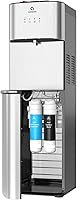
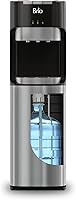
Brio Essential 3-Temp Bottom-Loader
 Best for a removable, dishwasher-safe drip tray
Primo 2-Temp Bottom-Loader
Brio vs Primo water dispenser: which one fits your kitchen?
The Brio fits a buyer who wants a room-temperature tap and a bottle alert. The Primo fits a buyer who needs only hot and cold water and wants a drip tray that goes in the dishwasher.
Both suit a kitchen corner or a small office break room, as long as the floor spot and the outlet are ready. The Brio is the deeper of the two, so measure the spot before you choose.
Which temperatures does each one give?
The Brio gives three settings, hot, room and cold, while the Primo gives hot and cold only. Room-temperature water is handy for pitchers, mixed drinks and filling sports bottles without a chill.
Hot water on the Brio and the Primo
Brio rates the hot side of its Essential model at up to 198 °F. Primo gives no hot-water temperature for its model, so the two can't be compared on that number.
Hot water can burn, so use the child lock on either unit and keep small children away from the hot spout.
Which bottle sizes does each one take?
The Brio fits 3 or 5 gallon jugs, so you can use a smaller bottle if your water use is lower. The Primo is built for 5-gallon bottles, so check with Primo before you buy a smaller jug for it.
A full 5-gallon jug holds roughly 40 lb of water, while a 3-gallon jug holds roughly 25 lb. The Brio's cabinet takes both, and Primo names only the 5-gallon size.
A 3-gallon jug is lighter to swap, while a 5-gallon jug lasts longer between changes. Pick the size you can lift and change without strain, since that's the size you'll handle every week.
How do the child locks compare?
Both units have a two-step child lock on the hot tap. Brio's lock releases from a control above the dispensing button, and Primo describes its lock as a two-step hot water safety lock.
Read each manual for the exact steps before you rely on the lock. If a child will be near the unit, learn how the lock works before a child is near the tap.
How big is each unit?
The Brio is the deeper and taller of the two, at 15.6 inches deep, 12.2 inches wide and 41.4 inches tall. The Primo measures 14.2 inches deep, 12.2 inches wide and 40.9 inches tall.
The Brio weighs 40.6 pounds, and we didn't find a weight for the Primo in the details we checked. Plan the floor spot for the Brio's extra depth, and ask Primo for a weight before you plan a move up stairs.
Which bottle alerts and drip trays does each one have?
The Brio has an LED display that shows an empty-bottle alert. Brio says its smart technology reminds you when the bottle needs replacing, so the swap is easier to plan.
The Primo has an LED night light for the spouts and a removable drip tray. Primo says the tray is dishwasher-safe, which makes cleaning quicker.
The night light doesn't warn you about the jug, so the bottle check falls to you.
We didn't find a removable drip tray in the Brio details, so check its manual before you plan the clean. Our how to clean a bottom-loading water dispenser guide covers the general routine.
How do the specs compare side by side?
The two units match on bottom loading, a two-step hot lock and 5-gallon bottles. They differ on temperatures, bottle sizes and size, so start with those rows.
| Product | Best for | Temperatures | Bottle size | Size (D x W x H) | Our score |
|---|---|---|---|---|---|
| Brio Essential 3-Temp Bottom-Loader | three temperatures and a bottle alert | 3 (hot, room, cold) | 3 or 5 gal | 15.6 x 12.2 x 41.4 in | 8.4 |
| Primo 2-Temp Bottom-Loader | a removable, dishwasher-safe drip tray | 2 (hot, cold) | 5 gal | 14.2 x 12.2 x 40.9 in | 7.8 |
What does each one leave out?
The Brio leaves out a removable drip tray in the details we checked. At 40.6 pounds, it is heavy to move, and we didn't find a Primo weight to compare.
The Primo leaves out a room-temperature setting, an empty-bottle alert and a size for 3-gallon jugs. If any of those matter to you, the Brio is the better fit.
Which one uses less power?
We didn't find a wattage for either the Brio or the Primo, so the two can't be compared on power from the specs alone. Power use also depends on how often you draw hot water and how warm the room is.
Our electricity use guide explains what drives power use on a hot and cold dispenser, so you can plan your own estimate.
Warranty and brand details
We didn't find a warranty term for either model in the details we checked. Ask Brio and Primo for the terms in writing before you order.
Brio says it is based in Southern California and makes filtration systems for homes and businesses, as well as coolers. That's useful if you want one brand for water equipment.
Which one suits a home with kids?
Both have a two-step lock on the hot tap, so the lock doesn't separate them. What separates them is what else the household drinks.
The Brio's room-temperature tap fills a child's water bottle without a chill, and its LED alert flags a nearly empty jug before the tap runs dry. The Primo is the simpler unit, with two settings to explain and a drip tray that goes in the dishwasher.
Either way, keep the hot spout out of small children's reach and teach older children how the lock works.
Which one suits a small office?
The Brio suits a break room that wants a room-temperature tap and an alert for the empty bottle. The Primo suits a front desk or break room that only needs hot and cold water and a lock on the hot tap.
A shared office unit gets more use, so the bottle alert matters more there. Whoever restocks the jugs should know which alert to watch, or the water runs out at the wrong moment.
How do the two scores compare?
The Brio Essential scores higher than the Primo's 7.8. Our score weighs specs, features and buyer feedback against what you're shopping for.
Most of the gap is the Brio's third temperature, its bottle alert and its fit for 3 gallon jugs. The Primo closes part of it with stainless steel reservoirs, a washable drip tray and a shallower body.
A higher score doesn't make the Brio right for everyone. If you only drink hot and cold water, the Primo gives you the same child lock, and the features it lacks are ones you wouldn't use.
What should you check before you order?
Check the temperatures you need, the jug size, the floor space and the warranty. Those four points settle most of the choice between these two units.
- Temperatures: three on the Brio, two on the Primo.
- Jug size: 3 or 5 gallons on the Brio, 5 gallons on the Primo.
- Floor space: a spot about 15.6 inches deep for the Brio, and 14.2 inches deep for the Primo, plus an outlet nearby.
- Warranty: ask both brands for the terms in writing.
Measure the spot first, including the height to any shelf above it.
Who should skip each one?
Skip the Brio if you want a lighter unit or a removable drip tray you can wash in the dishwasher. Skip the Primo if you need a room-temperature tap, an empty-bottle alert or a unit for 3-gallon jugs.
Brio vs Primo water dispenser: which one to pick
Pick the Brio if you want three temperatures, a bottle alert and the option of 3 or 5 gallon jugs. Pick the Primo if you want hot and cold water only and a drip tray you can clean in the dishwasher.
- Pick the Brio if you fill pitchers or mix drinks often.
- Pick the Brio if you want an LED alert before the bottle runs out.
- Pick the Primo if you only need hot and cold water.
- Pick the Primo if you want the shallower unit, at 14.2 inches deep.
For the Primo on its own, read our Primo water dispenser review, or compare it with the Avalon A4 in our Primo vs Avalon water dispenser comparison. Our best bottom-loading water dispensers roundup ranks both against the rest of the group, and our Brio 520 Series review covers the self-cleaning model if a UV feature matters to you.
Frequently asked questions
Which is better, the Brio or the Primo?
Neither wins for every kitchen, because the Brio gives three temperatures, an LED bottle alert and a fit for 3 or 5 gallon jugs. The Primo gives hot and cold only, but Primo says its removable drip tray is dishwasher-safe, so pick by the temperatures you use most.
Do both have a child safety lock?
Yes, both list a two-step child lock on the hot water spout. Brio's lock releases from a control above the dispensing button, and Primo describes a two-step hot water lock, so read each manual before children use the hot tap.
Which one fits 3 gallon jugs?
The Brio fits 3 or 5 gallon jugs, while Primo names 5-gallon bottles for this model, so check with Primo before you buy a 3-gallon jug for it. A 3-gallon jug is lighter to swap, which matters if you change bottles often.
Which one has a warranty?
We didn't find a warranty term for either model in the details we checked. Ask Brio and Primo for the terms in writing before you order, including whether the warranty covers parts and labor, and keep your receipt with them.