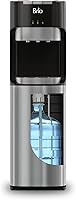
Avalon vs Brio Self-Cleaning Water Dispenser
The Avalon and Brio self-cleaning water dispensers differ most on filters, size and warranty, and both need a water line. Avalon uses two filters and a 1-year warranty, while Brio uses four filter stages and a digital panel.
On this page (17 sections)
- How we compared the two units
- Who makes each unit?
- What does installing each one involve?
- Which filters does each one use?
- Which temperatures does each model offer?
- How does the self-cleaning feature differ?
- What size and weight does each one have?
- Where does each one fit?
- Which lights and panel does each have?
- How much power do they draw?
- Which certifications does each maker name?
- What warranty does each one carry?
- What does a year of filter upkeep look like?
- What should you ask the maker before you buy?
- The specs side by side
- Who should pick which self-cleaning cooler
- Avalon vs Brio self-cleaning water dispenser: which one to pick?
Avalon and Brio both make a self-cleaning water dispenser that is bottleless and connects to a water line, so they are a direct match for a home or small office.
We compared the Avalon bottleless cooler (model A5BOTTLELESS) with the Brio bottleless cooler (model CLPOU520UVF4). Both have a filter, a self-cleaning feature and three temperature settings, so the differences are in the details.
Since both are bottleless, this comparison focuses on filters, size and upkeep. If you'd rather keep a jug, our bottom-loading water dispensers guide covers that route.
 Best for a simple two-filter setup
Avalon Self-Cleaning Bottleless Cooler
 Best for a four-stage filter and a digital panel
Brio Self-Cleaning Bottleless Cooler
How we compared the two units
We compared specs, features and warranty terms as each maker states them, and we research units rather than test them. For each self-cleaning feature, we use the maker's own words.
Our score weighs specs, features and buyer feedback against what you're shopping for. Avalon and Brio use different names for similar features, so we matched them by what each one does.
For Avalon's own information, see Avalon's website. For Brio, see Brio's website.
Who makes each unit?
Avalon and Brio are both brands that sell water coolers, and each describes itself a little differently. Avalon says it began in 2008 as an office product and breakroom solutions distributor.
Brio says it is based in Southern California and also makes residential, commercial and industrial filtration systems. Both brands sell jug-fed bottom-loaders as well as bottleless coolers, so you can stay with one brand whichever route you choose.
What does installing each one involve?
Both units come with an installation kit, but Avalon includes 20 feet of tubing and Brio includes 6 feet. Both need a cold-water connection, so plan the spot near one.
Avalon's kit has 20 feet of 1/4-inch tubing, a three-way push-connect adapter, an under-sink 3/8-inch adapter with a shut-off valve and a filter flushing adapter. Brio's kit has the same adapter types with 6 feet of tubing.
Longer tubing gives you more room to place the unit away from the connection. Tubing follows the cabinet and the wall, so the real run is longer than the straight-line distance.
Avalon self-cleaning water dispenser: the install kit
Both makers include detailed instructions with illustrations, so read those first. Follow the maker's install guide for the connection, since plumbing steps are outside what we cover.
If a Brio unit stops dispensing after you set it up, our Brio water dispenser not dispensing water guide lists the checks to run first.
Which filters does each one use?
Avalon uses two filters, a sediment filter and a carbon block, while Brio uses a four-stage ultrafiltration system with four filters in the box.
Avalon says its two filters last 6 months or 1,500 gallons, and it names the filter models as A5FILTER and A4FILTER. Brio calls its system a 4-stage ultrafilter with submicron membranes, and it names a replacement kit, the MIB400PKUF.
Brio calls its cooler a point-of-use (POU) bottleless unit, which means it filters water at the unit itself. The Avalon filters water at the unit too, through its two filters.
We don't rank the two on water quality. Follow each maker's guidance, and ask your local water utility about your tap water.
Which temperatures does each model offer?
Both units have three settings: cold, a middle setting and hot. Avalon calls the middle setting cool, and Brio calls it room temperature.
Brio rates its hot water up to 194 °F, and Avalon publishes no hot figure for this model. If you make tea or instant meals often, the hot side matters more than the middle setting, and both units cover hot water.
Both list a child safety lock. Avalon puts it on the hot spout, and Brio shows its lock status on the digital panel.
How does the self-cleaning feature differ?
Brio says its self-cleaning feature uses ozone, while Avalon lists a self-cleaning feature without saying how it works. That is the one self-cleaning detail the two makers don't share.
Brio self-cleaning water dispenser: the ozone feature
Brio says you activate the self-cleaning ozone with a touch of a button on its digital controls. Brio doesn't say how long the cycle runs or which parts it covers, so your manual is the place to look.
What Avalon says
Avalon names a self-cleaning feature and doesn't describe the method. Read the manual for what the feature does and what you still clean by hand.
The spouts and the drip area are the parts you can see and wipe, so check them on either unit. For the bigger question, see do self-cleaning water dispensers really work.
Our self-cleaning vs regular water dispensers comparison covers the choice between a cycle and a manual routine. For Avalon's routine, see how to clean an Avalon water dispenser.
What size and weight does each one have?
Brio is half an inch shallower and about 2 pounds heavier, and both stand about 41 inches tall. The Avalon measures 14 by 12 by 41 inches and weighs 44 lb, and the Brio measures 13.5 by 12 by 40.5 inches and weighs 46.1 lb.
Both units are 12 inches wide, so the fit is close. Weight matters most when you move the unit into place, so plan the route before you carry it.
Where does each one fit?
The Avalon is a freestanding unit that needs its own floor spot near the water connection. Brio lists its cooler for countertop and under-sink installation.
At 40.5 inches tall, the Brio is a tall unit for a counter, so confirm the fit with Brio before you plan the spot. A unit placed on a counter or inside a cabinet uses space there, which is a different trade-off from a floor unit.
Our Avalon A12 review covers a compact countertop bottleless model if counter height is a limit.
Which lights and panel does each have?
Both units have a nightlight, and Avalon also has a filter-change light. Avalon says its nightlight makes the spouts easier to see in the dark, and its replace-filter light comes on when a filter needs changing.
Brio's illuminated panel shows the child lock, a digital clock and a nightlight, so you get more controls in one place. If you want a light that tells you when to change a filter, Avalon is the one that lists it.
How much power do they draw?
Brio rates its cooler at 410 watts, and Avalon publishes no wattage for this model. The two can't be compared on that number.
Power use also depends on how often you draw hot water, so think about your habits.
Both are corded electric, so an outlet needs to sit near the install spot. Our electricity use guide explains what drives power use without any cost figures.
Which certifications does each maker name?
Both makers name UL, and Avalon adds NSF certification for its filter. Avalon says its filter is NSF certified and the cooler is UL listed, and Brio says its unit is UL approved.
Brio doesn't name NSF for its filter. Certifications describe the product, not your tap water, so ask your local water utility about that.
What warranty does each one carry?
Avalon gives a 1-year warranty, and Brio publishes no warranty term for this model. Ask the seller for Brio's terms in writing before you order.
If the length matters for your plan, ask whether the warranty covers parts and labor.
What does a year of filter upkeep look like?
Avalon's filters are due about every 6 months, and Brio publishes no schedule for its four stages. Avalon says its filters last 6 months or 1,500 gallons.
Spread over 6 months, 1,500 gallons is about 8 gallons a day, so a small household is likely to reach the 6-month mark first. Put the change date on your calendar when you install the filters.
Brio includes four filters in the box and sells a replacement kit under the name MIB400PKUF, so you can look up a refill before you buy.
What should you ask the maker before you buy?
Ask about the details that each maker leaves out, since they change what a year of ownership looks like.
- Brio: how long each of the four filter stages lasts, and what the warranty covers.
- Avalon and Brio: which parts the self-cleaning feature covers, and which parts still need a hand clean.
- Avalon and Brio: whether the feature needs the unit empty or full when it runs.
- Both: whether a longer tubing run is available if your water connection is far from the spot.
Keep the model number handy when you ask, so the answer matches the exact unit.
The specs side by side
The two units differ on filters, size and warranty, and they match on bottleless setup, three temperatures and a child safety lock. Read the table as a checklist and focus on the rows that match your kitchen.
| Product | Best for | Filtration | Temperatures | Size | Our score |
|---|---|---|---|---|---|
| Avalon Self-Cleaning Bottleless Cooler | a simple two-filter setup | Sediment and carbon block | Cold, cool and hot | 14 x 12 x 41 in | 8.1 |
| Brio Self-Cleaning Bottleless Cooler | a four-stage filter and a digital panel | Four-stage ultrafiltration | Cold, room and hot | 13.5 x 12 x 40.5 in | 8.3 |
Who should pick which self-cleaning cooler
Pick the Avalon if you want a simpler two-filter setup and a stated warranty. Pick the Brio if you want four filter stages and a digital panel.
- Pick the Avalon if you want two filters and a 1-year warranty.
- Pick the Avalon if a nightlight and a filter-change light matter to you.
- Pick the Brio if you want a digital clock and a panel with the child lock.
- Pick the Brio if you want hot water rated up to 194 °F.
If you'd rather keep a jug
If you'd rather skip the water line, a self-cleaning bottom-loader is the other route. Brio's 520 keeps the jug in a cabinet and adds a UV cycle you start with a button.
A jug-fed unit skips the install, but you buy, store and swap the jugs. That is the trade-off to weigh.
Avalon's jug-fed version is a bottom-loader that suits 3- to 5-gallon bottles. It has a nightlight, an empty-bottle indicator and a removable drip tray.
In a home kitchen
In a home kitchen, the water connection under the sink often decides the spot. If the unit sits within a few feet of it, either kit reaches, and if it sits across the room, Avalon's 20 feet gives you more reach.
In a small office
In a small office, both units need a water line and an install, so choose a spot near a cold-water connection. The Brio suits a break room that wants a panel, and the Avalon suits one that wants a simpler filter setup.
Whoever buys the unit also owns the filter calendar. Pick one person to note the install date and book the next change.
Avalon vs Brio self-cleaning water dispenser: which one to pick?
Pick the Avalon if you want a simpler two-filter setup with a stated warranty, and pick the Brio if you want a four-stage filter and a digital panel. Both need a water line, so the decision comes down to filters, space and the features you use most.
If you have floor space near the water connection, the Avalon is the closer match. If you want more filter stages in the box and a clock on the panel, the Brio fits.
Before you buy, read the install guide for the model you pick, and note the filter dates on your calendar once it's running. For more picks, see our best self-cleaning water dispensers roundup, or our Brio 520 review if a bottom-loader is your goal.
Frequently asked questions
Which is better, Avalon or Brio self-cleaning?
Neither wins for every home, because Avalon pairs two filters with a 20-foot install kit and a 1-year warranty, while Brio adds four filter stages and a digital panel. Pick by the filter design, the temperatures you need and the space you have.
Do Avalon and Brio self-cleaning units need a water line?
Yes, both are bottleless units that connect to a cold-water line, and both come with an installation kit. Follow the maker's install guide for the connection, and if you can't reach a line, a self-cleaning bottom-loader that takes a jug is the simpler route.
How often do the filters need changing?
Avalon says its dual filters last 6 months or 1,500 gallons. Brio publishes no schedule for its four-stage filters, so follow Brio's guidance and its replacement kit instructions, and note the install date so you know when each change is due.
Which one uses more power?
Brio rates its unit at 410 watts, and Avalon publishes no wattage for this model, so the two can't be compared on that number. Power use also depends on how often you draw hot water, so think about your own habits as well.
Is the self-cleaning feature the same on both?
No, Brio says its cooler uses an ozone feature that you start with a touch of a button, while Avalon lists a self-cleaning feature without describing the method. Either way, follow the maker's manual for cleaning, because a built-in feature doesn't replace it.