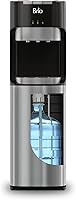
Self-Cleaning vs Regular Water Dispensers
A self-cleaning water dispenser is worth the extra money only if a built-in cycle matters to you, because you still follow the manual for upkeep. A regular model gives the same hot, room and cold water for less.
On this page (16 sections)
- How we compared the two models
- What does the self-cleaning cycle add to the Brio 520?
- Does a self-cleaning cycle replace your cleaning routine?
- What should you check before paying extra for a cycle?
- Which model has more lights and alerts?
- Do the temperatures differ?
- Is the child safety lock different?
- How do the size and weight compare?
- Which bottle size does each one take?
- Which one costs more, and what does the extra buy?
- Do bottom-loaders need filters?
- How much power do they use?
- The specs side by side
- What to confirm before you buy
- Who should pick which model
- Self-cleaning or regular: which water dispenser to pick?
A self-cleaning water dispenser runs a built-in cleaning cycle, while a regular water dispenser relies on the steps in its manual. Brio says the cycle on the 520 uses UV light and starts with a button.
We compared a Brio 520 Series self-cleaning unit with a standard Brio bottom-loader, so the brand and the bottle setup stay the same. That makes the cycle the main variable.
If you're weighing the basics first, our bottom-loading water dispensers guide covers the main styles.


How we compared the two models
We compared features, specs and upkeep for the Brio 520 Series (model CLBL520SC) and the Brio Essential bottom-loader (model CLBL420V2). We research units rather than test them, and for the cycle we use Brio's own words and make no claim beyond them.
Our score weighs specs, features and buyer feedback against what you're shopping for. The cycle is the main reason to pay more, so we focused on what it adds and what it leaves for you.
Same brand, same footprint and same temperatures keep the comparison fair. That leaves the cycle, the lighting and the price as the real differences.
What does the self-cleaning cycle add to the Brio 520?
The Brio 520 has a UV self-cleaning feature that you start with a button, and the standard model has no cycle at all. That one feature is the biggest difference between them.
Brio says you press the button and the unit takes care of the rest. That is Brio's description, and it doesn't change the advice to follow your manual.
Self-cleaning water dispenser: what the button does
Brio lists UV self-cleaning as a headline feature of the 520, next to the bottom-loading design. Brio doesn't say which parts the cycle reaches or how long it runs, so your manual is the place to find out.
Our Brio 520 review goes through the unit in more detail. To see what these cycles can and can't do, read do self-cleaning water dispensers really work.
What the regular model gives you instead
The standard bottom-loader gives you the cabinet, three temperatures, an empty-bottle alert and a two-step lock on the hot water. It has no UV cycle, no night light and no lit dispensing area.
Upkeep on that model is the manual's routine from start to finish. If you're comfortable with that routine, it covers the same daily use.
Who starts the cycle: you or the unit?
On the 520, you start the cycle with a button, so it runs when you remember to press it. Brio doesn't describe a timer or a schedule for it.
Other brands work differently. Euhomy says the UV light in its bottom-loader runs automatically, so compare how each cycle starts as well as whether it has one.
Not every self-cleaning method is the same
Brio's 520 uses UV light. Brio says its self-cleaning bottleless cooler uses ozone, and Avalon says a switch on its A12 starts an ozone function.
The names differ, and so do the start buttons and the parts each cycle covers. That is why "self-cleaning" on a product name tells you less than the maker's description and the manual.
Does a self-cleaning cycle replace your cleaning routine?
No. Plan on the manual's cleaning steps with either model, because a built-in cycle doesn't change that advice.
Unplug the unit before any cleaning, and check your manual for which parts to clean and how often. Rinse well and let the unit dry before you use it again.
Some manuals allow a cleaning kit, a manufacturer-approved cleaner or a mild vinegar solution. Use only what your manual names.
The spouts and the drip tray are the parts you can see collect spills, so check them first on both models. Think of the cycle as one task inside a routine, not the whole routine.
For the full routine, see our guide on how to clean a water dispenser. For timing, our how often to clean a water dispenser guide covers a schedule.
What should you check before paying extra for a cycle?
Check what the manual says the cycle covers, because the answer decides what the extra money buys. Brio doesn't spell out the details, so read the manual or ask Brio.
- Which parts does the cycle cover, and which parts still need a hand clean?
- How long does it run, and can you pour water while it runs?
- How often does the manual want a full clean, with or without the cycle?
- Does the manual name a cleaner or a cleaning kit?
If you can't find those answers, treat the cycle as a convenience and not as a replacement for your routine.
Which model has more lights and alerts?
The 520 adds a night light and a lit dispensing area, and both models have an empty-bottle alert. The lighting is the clearer difference.
Brio says the 520's LED night light and lit dispensing area help you see what you're pouring, pick the right spout and watch the drip tray. That helps most when you fill a cup in a dim kitchen.
The standard model has an LED display with an empty-bottle alert, and Brio says a reminder tells you when the bottle needs changing. The 520 also lists an empty-bottle alert, so both help you track the jug.
Do the temperatures differ?
Both models offer hot, room-temperature and cold water, so temperature doesn't separate them. Each has three settings.
The 520's upper temperature rating is 200 °F, and the standard model's is 198 °F. Two degrees is too small to be a reason to choose one over the other.
If you fill sports bottles often, room-temperature water saves a step on both, since it needs no heating or chilling first.
Is the child safety lock different?
Both models have a two-step lock on the hot water, so the lock doesn't set them apart.
On the standard model, you release a lock above the dispensing button. On the 520, Brio says the hot-water button relocks automatically after dispensing.
How do the size and weight compare?
The two Brio models share a footprint of 15.6 by 12.2 inches and stand 41.4 inches tall. The 520 weighs 39.6 lb, and the standard model weighs 40.6 lb.
A one-pound gap is too small to matter when you move the unit, so set the spot first. Because the footprint and height match, the fit in your space is the same for both.
Both are freestanding units with a corded plug, so an outlet needs to be close.
Which bottle size does each one take?
Both are bottom-loaders, but Brio describes the 520 for 5-gallon bottles, while the standard model's cabinet fits 3- or 5-gallon jugs.
If you plan to buy 3-gallon jugs, the standard model is the one that fits that plan. A 3-gallon bottle runs out sooner, so you swap it more often, though each jug is lighter to carry.
Neither unit comes with a bottle, so you'll buy the jug yourself.
Which one costs more, and what does the extra buy?
The 520 costs more than the standard model when we checked, and the extra buys the UV cycle, the night light and the lit dispensing area. Temperatures, footprint and the hot-water lock are the same.
Prices move, so compare current prices before you decide. Whether the gap is worth it depends on how much you value the cycle and the lighting.
If you'd follow the manual's routine either way and don't need a night light, the standard model gives you the same temperatures for less. If you want a cycle you can start with one press between cleanings, the 520 is the model that offers it.
Do bottom-loaders need filters?
Neither Brio bottom-loader lists a filter, so there is no filter schedule to track on either one. Both run from a jug and need no water line.
Filters belong to bottleless coolers, which connect to a water line. If that route interests you, our Avalon vs Brio self-cleaning comparison covers two self-cleaning bottleless units.
How much power do they use?
Brio publishes no wattage for either model, so power use can't separate them on paper. Hot-water habits matter more, because how often you draw hot water changes how much power the unit uses.
If power use matters to you, our electricity use guide explains what drives it.
The specs side by side
The two models differ on the clean cycle, lighting and cost, and they match on temperatures, footprint and loading style. Both are bottom-loaders with hot, room and cold water, so the comparison comes down to the cycle and the lighting.
| Product | Best for | Self-cleaning | Temperatures | Bottle size | Our score |
|---|---|---|---|---|---|
| Brio 520 Series Self-Cleaning | a button-start UV cycle | UV cycle, button start | Hot, room and cold | 5-gallon | 8.4 |
| Brio Essential Bottom-Load | bottom loading at a lower price | None, manual cleaning only | Hot, room and cold | 3- or 5-gallon | 7.9 |
What to confirm before you buy
Confirm the bottle size, the height of your spot and the cleaning section of the manual before you order.
- Height: both models stand 41.4 inches tall, so measure the space, including any shelf above.
- Bottle size: Brio describes the 520 for 5-gallon bottles, and the standard cabinet fits 3- or 5-gallon jugs.
- Outlet: both are corded, so an outlet needs to be close.
- Warranty: Brio publishes no term for either model, so ask the seller for the terms before you pay.
Read the cleaning section of the manual too, and note how often it asks you to clean.
Who should pick which model
Pick the 520 if a button-start UV cycle is worth paying more for, and pick the standard model if you want the same temperatures for less.
- Pick the 520 if you want a cycle you start with one press.
- Pick the 520 if a night light and a lit dispensing area matter to you.
- Pick the standard model if you want 3-gallon bottle support.
- Pick the standard model if you're happy following the manual's cleaning steps.
On a tight budget
On a tight budget, the standard model keeps the cabinet, the three temperatures and the empty-bottle alert at a lower cost. You give up the UV cycle and the night light, so decide whether those matter before you commit.
Part of the difference could go toward a cleaning kit, if your manual names one. Our water cooler cleaning kits guide covers what to buy and skip.
If you want a bottleless option
A bottleless cooler skips jugs but needs a water line, and some include a self-cleaning feature. Our Avalon A12 review covers a countertop bottleless model that has one.
In a small office
In a small office, the 520 suits a break room that wants the button-start cycle and a lit view of the spouts and drip tray. The standard model covers the same temperatures for less.
More people also means more hands on the spouts and the drip tray. Brio doesn't say the cycle reaches those parts, so a shared unit needs the manual's wipe-down routine on either model.
Self-cleaning or regular: which water dispenser to pick?
Pick the self-cleaning model if a built-in UV cycle is worth paying more for, and pick the regular model if you want the same temperatures for less.
Either way, plan on the manual's cleaning steps, since that is the usual advice. If you won't use the cycle, the regular model is the simpler pick.
If you're unsure, think about the routine you'll really keep. If you tend to skip cleaning, put a reminder on your calendar, because a cycle only helps when someone starts it.
For more self-cleaning models, see our best self-cleaning water dispensers roundup.
Frequently asked questions
Does a self-cleaning water dispenser need less cleaning?
Not necessarily, since Brio says the 520 runs its UV self-cleaning cycle when you press a button, but the cycle doesn't replace the steps in your manual. Unplug the unit and check the manual before you clean, and follow what it says about how often.
Does a self-cleaning cycle improve water quality?
We make no health or water-quality claims for any cycle, and we compare specs rather than results. Follow the maker's guidance for cleaning and filter changes, and ask your local water utility about your tap water if you have questions about it.
Is the Brio 520 worth more than the standard model?
It depends on whether a button-start UV cycle matters to you, because the 520 costs more and adds that cycle plus a night light. Both models give hot, room and cold water, so pay more only if you'll use the extras.
Do both models need the same cleaning?
Yes, both follow the cleaning steps in their manuals, and you should unplug either one before cleaning. The 520 adds a UV cycle you start with a button, while the standard model has no cycle, so its cleaning is entirely by the manual.
How often should I clean a regular water dispenser?
Follow the schedule in your manual, since each maker sets its own steps and timing. If the manual gives no schedule, ask the maker, and clean sooner if you see spills or residue on the spouts or the drip tray.