Top-Loading vs Bottom-Loading Water Dispensers
A bottom-loading water dispenser is easier to refill, because the jug slides into a cabinet instead of going up over the top. A top-loader still makes sense if you don't mind lifting a jug or you want to use lighter 3-gallon bottles.
On this page (15 sections)
- How we compared the two units
- Bottom loading water dispenser vs top loading: which is easier to refill?
- Who will be changing the jug?
- How much floor space does each one need?
- Can either one sit on a counter?
- Which bottle sizes does each style take?
- Do both give room-temperature water?
- Does either one need a water line?
- Flow rate, lights and the empty-bottle light
- Which one is easier to keep clean?
- How much power does each one use?
- Which one costs less, and what about the warranty?
- The specs side by side
- Who should pick which Brio 130 model
- Bottom loading vs top loading water dispenser: which one to pick?
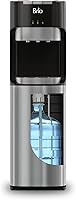
A bottom-loading water dispenser keeps the jug in a cabinet at floor level, while a top-loader needs you to lift the full jug up onto the unit.
We compared two Brio 130 Series units, one of each style, so the loading style is the main difference between them.
The bottom-load model takes a 5-gallon bottle in its cabinet. The top-load model takes 3- or 5-gallon bottles on top, and neither one needs a water line.
If you're new to the category, our bottom-loading water dispensers guide explains the basics. If the words cooler and dispenser confuse you, our water cooler vs water dispenser comparison sorts out the terms.

 Best for lighter 3-gallon jugs and a lower price
Brio 130 Series Top-Load
How we compared the two units
We compared specs and features for two Brio 130 Series units, and we research units rather than test them. For more on the brand, see Brio's website.
Same brand and same series keep the comparison fair. The flow rate, indicator lights and hot-water lock match, so the loading style and the bottle size are what separate the two.
Our score weighs specs, features and buyer feedback against what you're shopping for. A higher score means a better fit for the job, not a better machine overall.
Before you choose, our water dispenser buying guide for your home lists the other questions worth asking.
Bottom loading water dispenser vs top loading: which is easier to refill?
The bottom-load model is easier to refill, because the jug slides into a cabinet and never goes over the top. The top-load model means lifting the full jug onto the unit each time it runs out.
Weight is the reason this matters. A full 5-gallon jug holds more than 40 lb of water, about as much as the bottom-load Brio itself weighs, and a full 3-gallon jug holds about 25 lb.
Why a bottom loading water dispenser skips the lift
Brio says you connect the jug and slide it into the cabinet, with no heavy lifting or flipping. The cabinet also keeps the bottle out of sight.
If you carry jugs in from a garage or up a step, this design saves the most effort, since the only real lift is at the delivery door. To see how the jug connects to the unit, read how a bottom-loading water dispenser works.
Our Avalon A4 review looks at another bottom-loader in more depth.
Where a top-loader still makes sense
A top-loader makes sense when you already lift jugs without trouble, or when you want the choice of a lighter 3-gallon bottle. It also puts the jug in plain view, and Brio says you can check the water status at a glance.
Brio's top-load model has a spill-proof collar, and Brio says its no-spill system supports mess-free bottle changes. That helps if spills at the top are your main worry.
What a refill looks like on each unit
A bottom-load refill is two moves, and a top-load refill adds a lift. Brio says the bottom-load design skips the heavy lifting and the awkward flipping that top loading can involve.
- Bottom-load: connect the new jug, then slide it into the cabinet.
- Top-load: lift the full jug to the top, then seat it in the no-spill jug system.
Check your manual for the exact steps on either model. The extra step on a top-loader is the one that asks for strength and a steady grip.
Who will be changing the jug?
Pick the style around the person who changes the jug, not the person who drinks the most. If that person dislikes lifting a 40 lb jug up onto a unit, a bottom-loader is the easier choice.
A 3-gallon bottle on a top-loader is a middle path. It weighs about 25 lb when full, so the lift is easier, though you swap it more often.
Delivery matters too. Jugs that arrive at the door still have to be carried to the kitchen with either style, so a short route from door to dispenser helps.
How much floor space does each one need?
The bottom-load Brio is 14.37 inches deep, 11.81 inches wide and 41.73 inches tall, and it weighs 39.2 lb. That is about 3.5 feet of height, with the jug inside the cabinet.
Brio publishes no size for the top-load model, so measure your spot and the clearance above it before you order. A full jug has to be lifted over the top, so you need open space above the unit.
For a sense of scale, the Igloo top-loader above stands 36.54 inches tall before you add a jug. The bottom-load Brio is taller, but its jug is already inside that height.
Both Brio models heat and chill water, so both need an outlet nearby.
Plan for spare jugs as well, since the cabinet or the top holds only the jug in use. Spares live in a pantry, garage or closet, and our stands for 5-gallon jugs guide shows what to look for.
Can either one sit on a counter?
Brio lists both 130 models as freestanding units, and the bottom-load model is a floor unit at 41.73 inches tall. Igloo says its top-loader works on a countertop or on the floor.
A counter-height top-loader puts the jug even higher, which makes the lift harder. If counter space is the goal, our best countertop water dispensers roundup compares the compact options, including bottleless units.
Which bottle sizes does each style take?
The bottom-load Brio takes 5-gallon bottles, and the top-load Brio takes 3- and 5-gallon bottles. Neither unit comes with a bottle.
A 3-gallon bottle is lighter to lift but runs out sooner, so you swap it more often. A 5-gallon bottle lasts longer between swaps, so you lift less often but carry more each time.
Bottle size depends on the model more than the style. The Avalon A4 is a bottom-loader that Avalon says suits 3- to 5-gallon bottles, and Brio's Essential bottom-loader has a cabinet that fits either size.
So a bottom-loader isn't always a 5-gallon-only unit. If you want a bottom-loader and 3-gallon bottles, filter your shortlist by that cabinet size.
Do both give room-temperature water?
No. The bottom-load Brio gives hot, room-temperature and cold water, while the top-load Brio gives hot and cold only.
Brio's examples for the bottom-load model include filling sports bottles, preparing soups and making iced tea. Room-temperature water saves a step when you fill a bottle, because it needs no heating or chilling first.
If you mostly make tea or instant soup, the hot side matters more than room temperature, and both Brio models cover it. Both also have a two-step lock on the hot water that Brio says relocks after each pour.
Does either one need a water line?
Neither Brio 130 model needs a water line, so setup is the same for both. Brio says they need no tools, plumbing or water line.
Setup comes down to choosing a spot, plugging in and loading the first jug. Check your manual for the first-use steps before you connect a jug.
Bottleless units connect to a water line, so their install is a different job. For that type, see our bottleless vs bottled water coolers comparison.
Flow rate, lights and the empty-bottle light
Brio gives both models a 1.5 liter-per-minute flow rate, so filling a cup takes about the same time on either. A one-liter bottle takes roughly 40 seconds if you hold the button the whole time.
Both units have indicator lights that show when the hot and cold sides are ready. You can check that before you fill a cup.
The bottom-load model adds an empty-bottle light. That matters more on a bottom-loader, because the jug is hidden in the cabinet and the light is how you know when to order the next one.
Which one is easier to keep clean?
Neither Brio 130 model has a self-cleaning feature, so both rely on the cleaning steps in the manual. Unplug the unit and check your manual before any cleaning, then rinse well and let the unit dry.
Some manuals allow a cleaning kit, a manufacturer-approved cleaner or a mild vinegar solution. Use only what your manual names.
The styles differ in where spills show up. A top-loader's collar and spouts sit in plain view, while a bottom-loader hides the bottle, so look inside the cabinet each time you swap jugs.
For a full routine, see how to clean a water dispenser. For timing, how often to clean a water dispenser covers a schedule.
How much power does each one use?
Brio rates the bottom-load model at 300 watts and publishes no wattage for the top-load model, so the two can't be compared on that number. Brio also lists ENERGY STAR 3.0 for the bottom-load unit.
ENERGY STAR is a U.S. efficiency program, and you can read more at ENERGY STAR. How often you draw hot water changes power use too, which our electricity use guide explains.
Which one costs less, and what about the warranty?
The top-load Brio is the lower-priced of the two when we checked. Prices move, so compare current prices before you buy.
The saving comes with trade-offs. You lift the jug at every refill, you lose the room-temperature tap, and you lose the empty-bottle light.
Brio publishes no warranty term for either model. Ask the seller for the terms before you pay, and get the length in writing.
The specs side by side
The two Brio 130 models differ on loading style, bottle size and temperatures, and they match on flow rate and setup. Read the table as a checklist and focus on the row that matters most in your kitchen.
| Product | Best for | Loading style | Bottle size | Temperatures | Our score |
|---|---|---|---|---|---|
| Brio 130 Series Bottom-Load | refills without lifting | Bottom, in a cabinet | 5-gallon | Hot, room and cold | 8.6 |
| Brio 130 Series Top-Load | lighter 3-gallon jugs and a lower price | Top, jug lifted on | 3- and 5-gallon | Hot and cold | 8.0 |
Who should pick which Brio 130 model
Pick the bottom-load model if lifting is your main concern, and pick the top-load model if you already lift jugs and want 3-gallon bottles.
- Pick the bottom-load model if you want no lifting and a jug kept out of sight.
- Pick the bottom-load model if you want room-temperature water as well as hot and cold.
- Pick the top-load model if you want to use 3-gallon bottles.
- Pick the top-load model if you want a spill-proof collar and the lower price.
In a kitchen with floor space
In a kitchen with room on the floor, the bottom-load model is the simpler daily unit, since the jug stays low and out of sight. The unit stands about 3.5 feet tall, so leave room for that height.
In a small office or break room
In a small office, a bottom-loader keeps jug swaps easy for whoever changes them, and the jug stays out of sight in the break room. The top-load model suits a break room that already buys 3-gallon jugs, or one with a counter spot.
Bottom loading vs top loading water dispenser: which one to pick?
Pick a bottom-loading water dispenser if you want the easier refill, and pick a top-loader only if you don't mind the lift. For these two Brio models, loading style decides most of the choice.
For most homes, the bottom-load Brio is the simpler pick, since it skips the lift and adds room-temperature water. The top-load Brio fits when you want 3-gallon bottles or the lower price.
If you're unsure, answer three questions: who changes the jug, how much open space the spot has, and whether you want room-temperature water. Those answers usually point to one style.
For more models, see our best bottom-loading water dispensers roundup.
Frequently asked questions
Is a bottom-loading water dispenser easier to use than a top-loader?
For most homes, yes, because a bottom-loading unit keeps the jug in a floor-level cabinet and you never lift it over the top. A top-loader works fine if you lift jugs easily, and it can take 3-gallon bottles, which hold about 25 lb of water when full.
Can a top-loading Brio 130 take a 3-gallon bottle?
Yes, Brio says the top-load 130 Series model takes 3- and 5-gallon bottles, while the bottom-load model is made for 5-gallon bottles only. Neither unit comes with a bottle, so plan to buy the jug separately and confirm the size you want first.
Do bottom-loading water dispensers need a water line?
No, a bottom-loading dispenser like the Brio 130 Series runs from a jug, and Brio says it needs no tools, plumbing or water line. Bottleless units are a different type that connects to a water line, so for those, follow the maker's install guide.
How much power does a Brio 130 Series unit use?
Brio rates the bottom-load model at 300 watts and lists ENERGY STAR 3.0 for it, but it publishes no wattage for the top-load model. Hot water use also changes power use, so think about how often you'll draw hot water as well as the wattage.
Does a top-loading water dispenser spill more?
Not necessarily, since Brio says the top-load 130 has a spill-proof collar and a no-spill system for mess-free bottle changes. The jug still goes up top, so changing it takes more care than sliding a jug into a bottom cabinet.